
How Europe is already building the energy system it always needed – and how we can accelerate.
In my previous post, I argued for abundant energy: Energy is the ultimate dependency, yet the liberating policy instruments and investment budget already exist. The rest of the ARTS agenda thus depends on whether Europe takes that exit or keeps paying the invoice. In this post, i explore the economics of abundant energy.
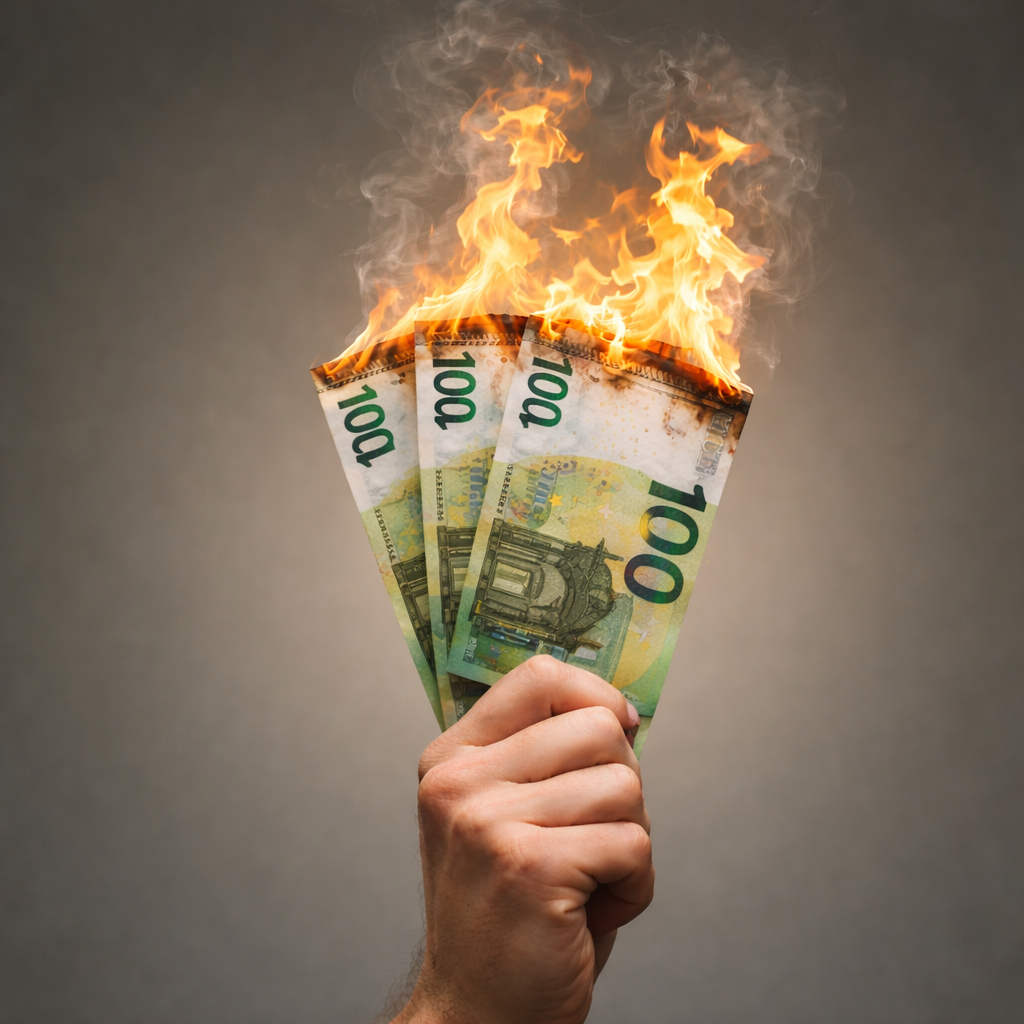
Every year, European governments spend over €100 billion subsidising fossil fuel consumption. It is literally money burned: No asset bought, No ROI. A plume of smoke, money exported, and some useful work done. Each year, the dependency renews, and the invoice arrives again.
Critique on fossil fuel subsidies is known, and usually owned by environmentalists. But, while they are right, there is another capitalist argument that should resonate more broadly;
Diverting fossil fuel subsidies are about capital allocation and returning dividents, and the European market mechanisms are becoming increasingly favourable to make the switch.
The sun doesn’t send a bill
The premise of the current energy system is scarcity. You burn something finite, you pay for the privilege. That made sense when the only way to power a civilisation was to dig or drill something up.
But this mechanism is starting to become disconnected from physical reality, and we should accelerate that transition.
Our sun delivers the equivalent of one full year of human energy consumption every single hour. The constraint here is not energy. It is the capture model. We can (and should!) generate surpluses, treating the sun’s energy as the flux that it is, instead of the current model where we treat energy as a stock that can deplete.
In that scenario, pricing electricity as if it is scarce makes no sense anymore.
The gears are already turning
And the good news is what most policy commentary misses: the transition away from that model is not a future project. It is already operational.
Contracts for Difference, now running in the Netherlands, UK, Denmark and eight other EU member states, de-risk renewable generation investment through competitive auctions. Developers bid for the lowest price they will accept. The state covers the gap when markets fall below that price. When markets rise above it, the surplus flows back. In Portugal, that mechanism generated a €2.5 billion surplus in 2023, redistributed directly to households as a discount on their bills.
The UK’s offshore wind strike price is 50% lower than it was a decade ago.
These are not projections. This is the cost curve, moving. Power prices are falling and projects still get built.
Redirect the fuel
So here is the question that follows: what if the €111 billion currently subsidising fossil fuel consumption was redirected into CfD instruments at scale?
Not as charity. As capital investment.
Fossil subsidies buy one year of consumption of a diminishing asset. The same money, directed into renewable generation, buys a 20+-year productive asset with zero fuel cost from day one. The concession model handles the rest: competitive bidding keeps costs honest, private operators take construction risk, the state sets the public interest terms.
Most countries leading the energy transition built this structure. Norway through Statkraft. Sweden through Vattenfall. Denmark through Ørsted.
These countries are succesfull at deploying renewables at scale, and the scale can be greatly accelerated by diverting fossil fuel subsidies.
Infrastructure expenses multiply with disperse benefits; the state has a role to invest.
You might ask; If energy prices become so low, there might not be a profitable market. But public transport systems don’t break even on ticket revenue. They never will. It’s not a failure. It is the point.
Despite public transport being unprofitable in many occasions, we pay the subsidies and concessions, because without it, cities wouldn’t function at all, and their productivity collapses. The relatively small expense on transit creates benefits that are dispersed across the whole economy, invisible in any single fare, enormous in aggregate. That is why states fund it.
Energy at near-zero cost works the same way, but much more fundamental. For every euro of energy expenditure in the EU, approximately €60 of economic activity depends on it. Energy is not one input among many. It is the necessary condition under which all other inputs function. Permanently reducing energy costs is a structural productivity intervention, not an energy policy. That’s exactly why fossil fuel subsidies exist. But now we can multiply that money and drive prices down much further.
Price power, not energy.
Make electricity cheap enough and a new problem appears. Everyone uses too much, all at once. The grid collapses under flat demand. Cheap energy without a timing signal is just a different kind of crisis: that’s the current congestion crisis in the Netherlands.
But the solution to that problem has already been named. The question is not how much energy you use. It is when you use it. A kilowatt drawn at 2am when wind is abundant costs the system almost nothing. The same kilowatt at 7pm on a cold Tuesday costs considerably more.
Large parts of the electricity markets already trade in power, albeit hidden: kWh in in 15-minute blocks, which is in essence energy over time: another word for power.
Dynamic household contracts exist and are growing. And by 2027, the Dutch distribution system operators introduce time-of-use transport tariffs at household level across the Netherlands.
This is the shift from energy markets to power markets. From paying per kilowatt-hour to paying for kilowatts at a given moment. The pricing signal governs not whether you can afford to draw, but when it makes sense to draw. Near-zero generation cost and time-of-use pricing are not in tension. They are the two halves of the same system.
Name the destination: Near Zero-Cost Energy
Redirecting fossil fuel subsidies into CfDs is not an environmental concession. It is an ROI demand. Scale generation far enough, and metering energy starts to make no sense — like metering air. The abuse mechanism is already in place: you don’t charge for the kilowatt-hours, you charge for the kilowatts. When you draw matters. How much, increasingly, does not.
What is missing is the willingness to look at where this points and say it plainly: electricity as public infrastructure, generated at near-zero marginal cost, distributed through a grid priced by timing rather than volume.
We are not waiting for a breakthrough. We are waiting for the ambition to match the trajectory already in motion.
The money is already being spent. The only question is what we demand in return.